
Smart Home: Saving Energy While Living Better
Share
Today, the smart home is no longer a luxury reserved for tech enthusiasts.
It has become a true everyday ally, helping us reduce our environmental impact while enhancing our comfort.
Thanks to home automation, it’s now possible to consume less, live better, and take action for the planet, without compromising on quality of life.
1. Understanding Home Automation and Its Impact on Energy Efficiency
Home automation, or the art of making your home smarter, relies on the integration of connected technologies that control, measure, and optimize energy consumption.
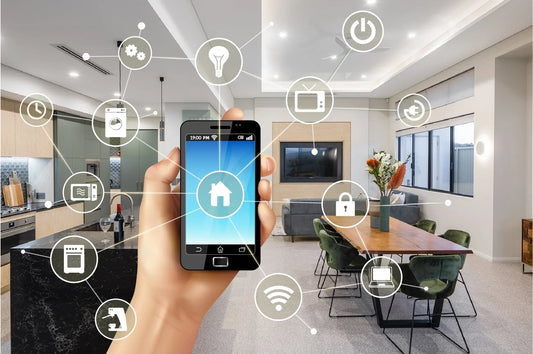
Smart thermostats, motion sensors, connected light bulbs, programmable sockets… all these smart devices automatically adjust their behavior according to your needs.
Practical example:
A smart thermostat learns your habits and adjusts the temperature based on your presence.
Result: up to 25% savings on heating bills, effortlessly.
2. Intelligence Serving Comfort and the Planet
One of the main strengths of the connected home is its ability to combine comfort with sustainability.
Modern technologies don’t just automate tasks, they anticipate your needs.
Imagine a home where:
-
Lights turn off automatically when you leave a room.
-
Heating stops when a window is open.
-
Blinds lower themselves to keep the house cool in summer.
Each small gesture, once insignificant, becomes an eco-friendly and economical act.
It’s not just about technology, it’s a new philosophy of smart living.
3. Key Smart Devices for Reducing Energy Consumption
a. The Smart Thermostat
A cornerstone of the eco-friendly smart home.
It automatically regulates temperature, learns your habits, and optimizes heating based on weather conditions.
b. Smart Lighting
Smart bulbs consume up to 80% less energy than traditional ones.
They turn on only when needed and adjust to natural light levels.
c. Smart Plugs and Power Strips
They automatically cut power to devices on standby, a commonly overlooked source of wasted energy.
d. Connected Solar Panels
By combining renewable energy with connected technology, homeowners can achieve an unprecedented level of energy independence.
4. Data: The Key to More Responsible Consumption
Smart homes don’t just automate, they analyze and advise.
Through dashboards and mobile apps, users can monitor their energy use in real time, spot inefficiencies, and adjust their behavior.
This digital awareness transforms every household into an active player in the energy transition.
Technology doesn’t replace responsibility, it supports it.
5. Long-Term Economic and Environmental Benefits
Investing in an eco-friendly smart home means choosing a long-term vision.
Even if the initial cost may seem high, the benefits quickly add up:
Reduced electricity and gas bills
Longer lifespan for appliances
Increased property value
Lower CO₂ emissions
Homes equipped with smart solutions typically cut energy consumption by up to 30%.
It’s a tangible benefit, for both your wallet and the planet.
6. A More Conscious and Responsible Lifestyle
Smart living isn’t just about technology, it’s a state of mind.
Adopting home automation means embracing a simpler, smoother, and more sustainable life.
Every action becomes a step toward a greener future.
And what if, tomorrow, every household became a mini power hub, capable of producing, storing, and sharing clean energy?
That future is already taking shape, and it begins at home.